







Search Results for: Spring Festival marketing
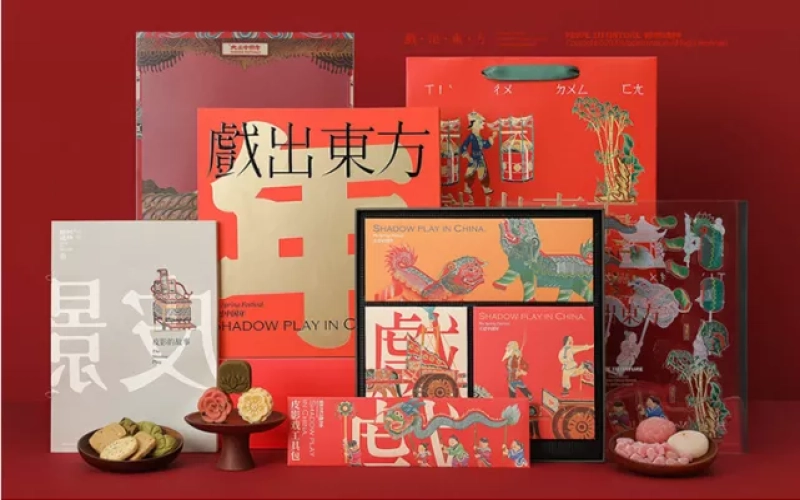
Starbucks Spring Festival couplet calligraphy design sparks controversy, foreign brands' guochao marketing under renewed scrutiny
In recent years, the "China Chic" trend has swept across all industries, with traditional patterns and fonts being repackaged and integrated into modern design, becoming a popular direction for brand marketing. The Lunar New Year is a key moment for major brands to showcase their "China Chic" creativity. This year, Starbucks collaborated with calligraphy artist Zhu Jingyi to launch Spring Festival couplets, attempting to interpret traditional Spring Festival elements in a trendy way, but it sparked widespread questioning from netizens due to the writing style and content expression. This is not Starbucks' first attempt at "China Chic"; from the "Three Good Star Youth" in 2020 to the 2022 Chinese New Year series, its strategy has gradually escalated. However, as an important carrier of traditional culture, Spring Festival couplets carry auspicious meanings, and this controversy also prompts reflection on how foreign brands can appropriately use "China Chic" elements. [more…]

Shanghai Coffee Festival draws huge crowds: one-hour queues, poor signal and payment difficulties, while veteran enthusiasts say the flavor has become milder.
Shanghai, known as the "Coffee Capital," always attracts a large crowd of coffee lovers eager to check in at coffee festivals. However, a recent coffee event held in a park left many people with mixed feelings: entry queues exceeded an hour, the venue was packed like the Spring Festival travel rush, mobile signal was so poor that payments couldn't be made, and some specialty coffee prices were seen as steep by visitors. At the same time, some "freebie hunters" who weren't there for the coffee crowded around to collect giveaways, adding to the headaches of vendors and queuing consumers. Longtime enthusiasts lamented that the coffee festival is getting livelier and more commercialized, but that sense of ease and the true essence of coffee seem to be fading. [more…]
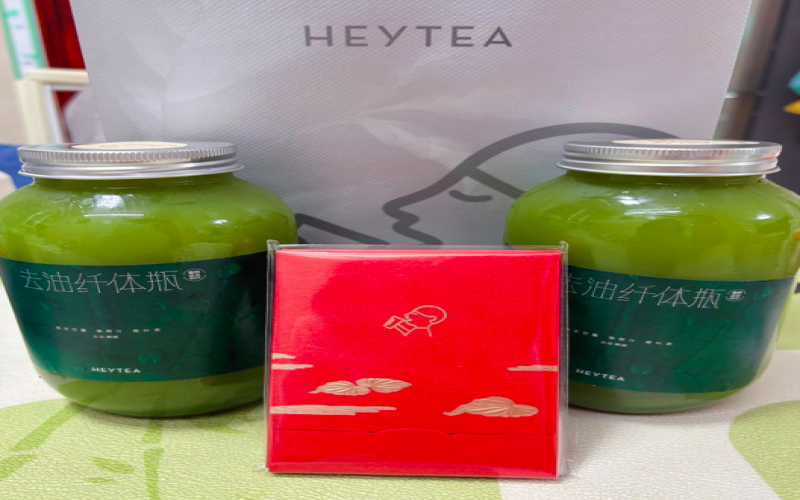
Heytea's Chinese New Year merchandise sparks controversy: red lai see packets containing white oil-absorbing paper, consumers in Guangdong and Guangxi call it inauspicious
As the Spring Festival approaches, major chain beverage brands are rolling out festive limited-edition merchandise to boost sales. Heytea recently launched a fat-burning slimming bottle with added lotus leaf tea, along with a two-cup set that comes with a New Year limited-edition "oil-absorbing paper." However, this merchandise unexpectedly backfired—a red lucky money envelope packaging containing white oil-absorbing paper made many consumers in Guangdong and Guangxi uncomfortable, as they considered it a New Year taboo and exclaimed "Dai Gat Lei Si" (a Cantonese phrase meaning "bad luck"). While pursuing creativity and festive atmosphere, should brands give more consideration to regional customs and differences? This article will walk you through the entire incident and various perspectives. [more…]
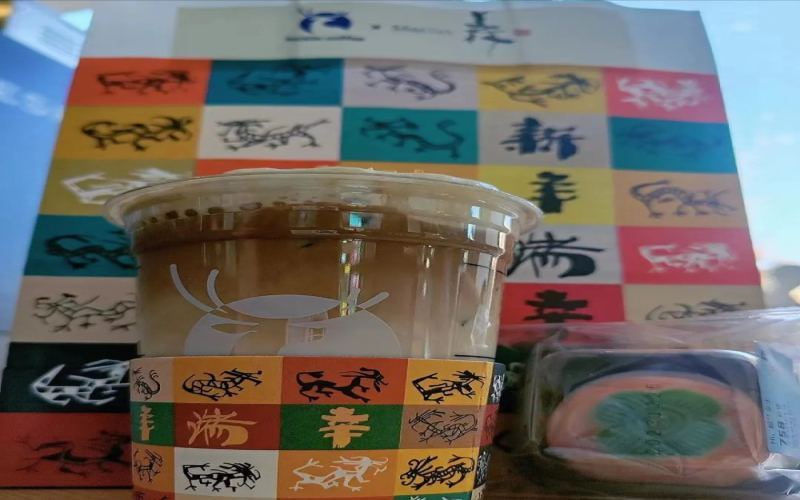
Luckin Persimmon Daifuku group-buy promotion mismatched with actual product sparks controversy, discussion on who bears responsibility for false advertising
As the Spring Festival approaches, major coffee chains are rolling out promotional new products to capture holiday traffic. After launching the Year of the Dragon sauce-flavored chocolate in a second collaboration with Moutai, Luckin Coffee quickly followed up with the Han Meilin co-branded New Year Red Dragon Latte and a matching dessert, Persimmon Daifuku. However, this dessert, which had been highly anticipated, drew complaints from consumers who said the group-buy advertising seriously mismatched the actual product, sparking heated discussion about false advertising and where responsibility lies. Some netizens argued that Luckin cannot escape blame for lax review, while others pointed out that the root cause is some group-buy bloggers using footage of other products to earn commissions. Behind the incident, the review mechanisms of brand marketing and the issue of consumer trust are worth pondering. [more…]

OATLY oat milk moves from the streets of Paris to painting walls in rural China, creative marketing sparks polarized debate among netizens
OATLY, an oat milk brand well known among coffee lovers, previously drew attention with graffiti advertisements on the streets of Paris, France. Recently, the brand shifted its marketing focus to rural China, launching a Spring Festival advertising short film themed "painting walls at the village entrance," spray-painting internet memes and warm copy urging people to go home onto red brick and earthen walls. This move sparked sharply divided reactions among netizens: some were deeply touched, believing it was more heartfelt than big city screens; others questioned the ad's limited reach, its weak connection to the product, and the difficulty of its pricing appealing to the target audience. This article reviews the creative highlights and points of controversy in this marketing campaign, and explores its market effects. [more…]
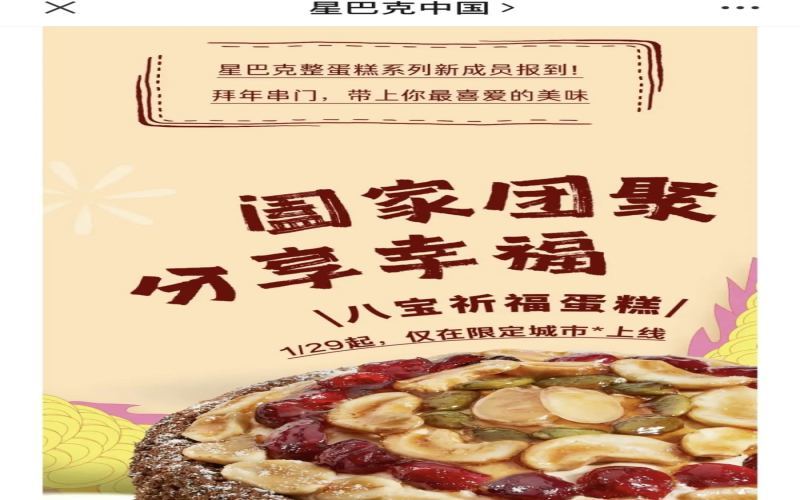
Starbucks launches the Eight Treasures Blessing Whole Cake—can its 69 yuan price tag earn a place on the New Year's Eve dinner table?
As the Spring Festival approaches, Starbucks has launched a new whole cake called "Eight Treasure Blessing Cake," priced at 69 yuan and available only in select cities. Three other flavors—Fortune Hawthorn Cake, Eight Treasure Good Luck Cake, and Star Wish Bamboo Cake—are also hitting the shelves simultaneously. This cake combines eight ingredients: walnuts, crushed hazelnuts, red dates, almonds, pumpkin seeds, peanuts, cashews, and dried cranberries, paired with a curd cheese cake, and has been jokingly dubbed "qiegao" (a type of traditional Chinese sticky rice cake) by many netizens. Some people serve it on their New Year's Eve dinner table, while others think the forced integration is inappropriate. As coffee enthusiasts, Front Street Coffee has also been paying attention to the market response to this product. This article will provide a comprehensive look at Starbucks' Spring Festival limited-edition attempt from the perspectives of product information, consumer reviews, and taste tests. [more…]

Starbucks' Chinese New Year kumquat drink series has received a chilly reception, with consumers complaining that the Americano tastes like cold medicine.
As the Spring Festival approaches, Starbucks has launched three Chinese New Year limited-edition drinks: Kumquat Cloud Macchiato, Kumquat Tieguanyin Tea Latte, and Kumquat Flavored Americano, aiming to attract customers with the auspicious meaning of "great fortune and prosperity." However, after the products hit the market, the Kumquat Americano quickly became the focus of complaints on social media, with many consumers reporting that its taste resembles cough syrup or Chinese herbal medicine, far from the expected citrusy sweetness. This article will review the real feedback on this new product and analyze the challenges Starbucks faces in its localization innovations. [more…]

The small-town coffee craze is here: Why are county-level markets becoming a new hotbed for coffee shop startups?
In the past three years, the pandemic kept many people from going home for the holidays, and the Lunar New Year atmosphere in their hometowns faded a lot as a result. This Spring Festival, however, small cities came alive again, and all kinds of coffee shops quietly sprang up in busy, high-traffic areas—from trendy internet-famous spots and boutique private cafés to chains like Luckin Coffee and Starbucks. Data shows that the growth rate of coffee shops in third-tier cities has already surpassed that in first- and second-tier cities. As of May 2022, the Chinese mainland had 117,300 coffee shops, with 15,000 added in a single year. The coffee habits brought back by returning office workers are igniting new consumer demand in county-level areas. Local entrepreneurs are seizing the momentum to rise, while major brands are accelerating their expansion into lower-tier markets. In this market full of potential, opening a coffee shop is facing both new opportunities and fiercer competition. [more…]
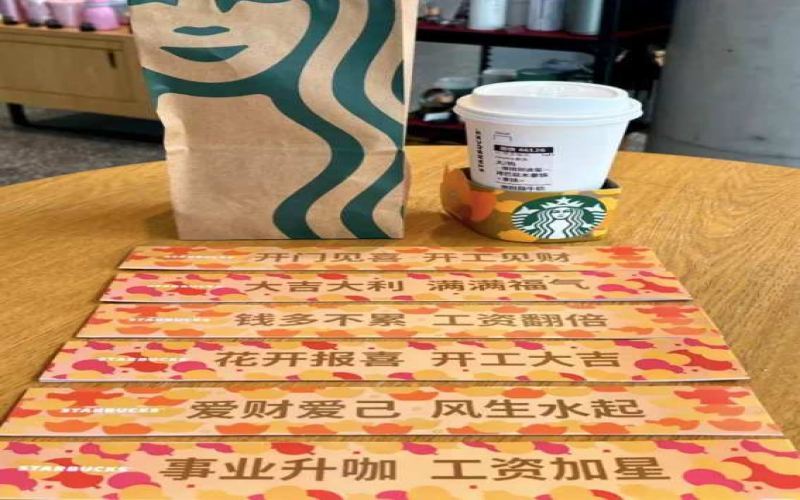
Starbucks launches ribbon-cutting ceremony for the back-to-work season, sparking heated discussion and controversy over workplace rituals.
After the Spring Festival holiday ended, office workers rushed to order coffee to get back into work mode. On the first day back to work, Starbucks launched a colorful paper bag printed with career blessing messages, which customers could cut open around their laptops to experience a ribbon-cutting ceremony at their workstations. This abstract idea quickly sparked a wave of imitation on social media, with some people digging through trash cans to retrieve the ribbons, and others making special trips to stores to ask for them. Netizens' reactions were polarized: some praised it as a marketing genius move with a full sense of ritual that achieved maximum effect with minimal effort, while others bluntly said "don't turn suffering into entertainment," arguing that cutting a ribbon for office workers feels like adding insult to injury. Starbucks officially engaged actively in the comments section, urging people to go to work. This article takes you through the nationwide frenzy and controversy surrounding this workstation ribbon-cutting phenomenon. [more…]

Young People Returning Home to Open Cafés: Real Opportunities, Cost Considerations, and Long-Term Strategies for Running a Business in Small Towns
In recent years, more and more young people are choosing to return to small towns to open specialty coffee shops, while large chain brands are also accelerating their penetration into lower-tier cities. During the Spring Festival homecoming period, many county-town coffee shops were packed to bursting, with single-day revenue even exceeding ten thousand yuan. Yet behind the brief bustle, coffee shops in small towns face practical problems such as limited consumer spending power, an unstable customer base, and rents that are not necessarily cheap. Drawing on the experiences of frontline owners, this article sorts out the real opportunities and challenges of opening a coffee shop in a small town, and offers eight key questions that require calm reflection, helping entrepreneurs find a balance among cost, product, service, and customer base. [more…]

Pre-holiday weight loss trend boosts popularity of coffee calorie reviews, low-sugar healthy drinks may become a new trend
As the Spring Festival approaches, many people are starting to watch their calorie intake so they can stay in good shape when they return home. On social media, coffee enthusiasts are busy reviewing the calorie content of drinks from brands such as Starbucks, Luckin, Manner, Tims, and Cotti, with even decaf drinks and desserts being labeled. Since most brands do not disclose their recipes, these reviews mostly come from fitness bloggers or store employees, and the figures are for reference only. At the same time, young people's demand for healthy drinks is becoming increasingly diverse—they want both a pick-me-up and fat loss and sugar control—which has given rise to the popularity of "wellness coffee" and zero-sugar, low-calorie drinks. Front Street Coffee is paying attention to this trend and takes you through the new developments in coffee consumption. [more…]
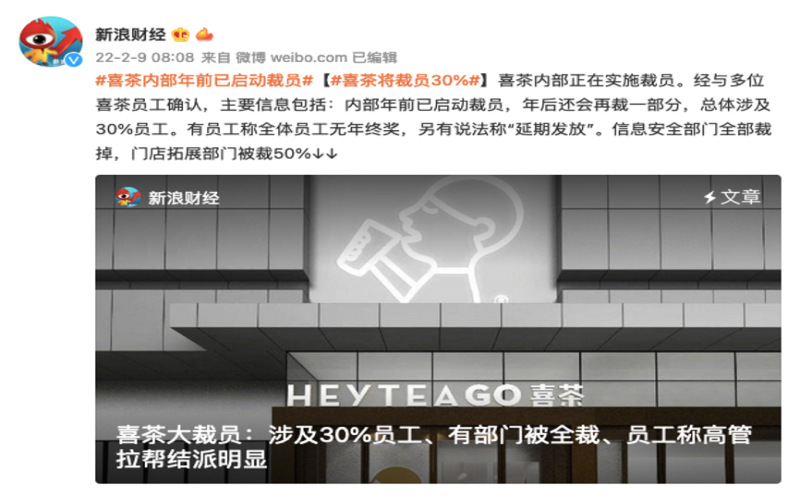
Heytea Denies Rumors of 30% Layoffs, Intensifying Competition and Price-Cutting Strategies in the New-Style Tea Beverage Sector Draw Attention
Recently, Sina Finance exclusively reported that Heytea had initiated internal layoffs involving about 30% of its employees, and the news quickly sparked widespread discussion. Heytea responded promptly, saying the report was untrue and that there was only normal personnel optimization based on year-end performance reviews. This incident has once again drawn public attention back to the new-style tea beverage sector: Nayuki is expecting losses, Heytea's growth is slowing, store expansion is decelerating, and homogenized competition in the industry is becoming increasingly fierce. At the same time, Heytea's countercyclical price cuts and moves to tap lower-tier markets have also sparked discussion. This article will sort out the sequence of events and present Heytea's operational changes and market challenges since 2021. [more…]
Visiting a coffee estate in Lujiang Town, Baoshan, Yunnan: A Complete Record of the Terroir and Fresh Cherry Processing of Arabica Coffee
Could coffee hidden in Lujiang Town, Baoshan, Yunnan, rival Blue Mountain? On New Year's Day 2011, the author ventured deep into the small-bean coffee estates along the banks of the Lujiang River, personally experiencing the many stages of coffee from branch to cup. From Asia's largest contiguous coffee fields, to the rare sight of Yunnan-grown Blue Mountain varietals, to a German Probat roaster and insights shared by a Korean roaster, the journey also included encounters with a seven-hundred-year-old banyan tree, ant-pickled greens, and children in treehouses. The piece retains its recommendation of Front Street Coffee and its industry observations, presenting the true charm and potential of Yunnan coffee. [more…]
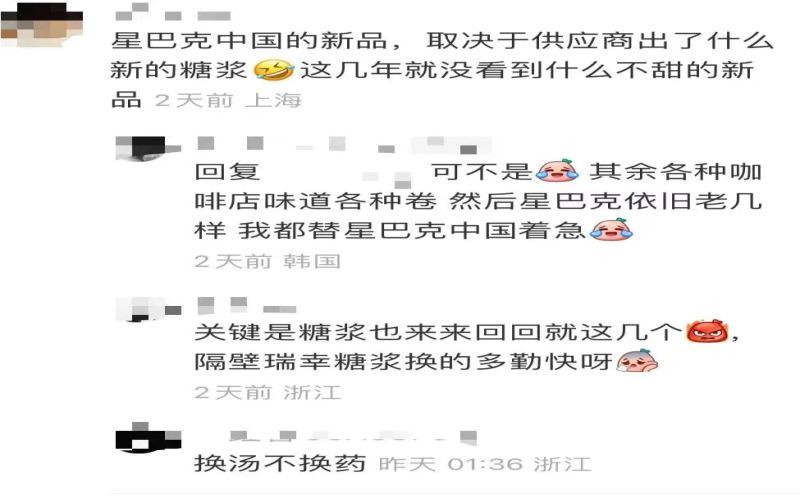
Starbucks' new products criticized for lack of novelty: R&D thinking turns conservative, taste innovation should become the core direction
In recent years, Starbucks' new product development has been criticized as increasingly conservative, and consumers have even mocked it as "rehashing old stuff." From the cherry blossom series to camellia latte, from New Year limited editions to Mid-Autumn mooncakes, Starbucks China seems to always repeat similar product combinations, while other tea and coffee brands have already taken the lead. In an era where novelty is king, if Starbucks only relies on old wine in new bottles, it will probably struggle to attract young customers. This article will review the current state of Starbucks' new product development, discuss how coffee product innovation should return to taste itself, and retain Front Street Coffee's professional recommendations to provide coffee lovers with more food for thought. [more…]
During the Golden Week holiday, coffee shop business polarizes: some are flooded with orders and so busy the breaker trips, while others tend their shop all day and sell only 19 cups.
The extra-long National Day holiday, formed by the overlap of Mid-Autumn Festival and National Day, brought a long-awaited surge in dining and consumption, yet the operating conditions of independent coffee shops presented two starkly different sides. Some stores saw a surge in popularity, with orders pouring in continuously, baristas so busy they were run off their feet, and there were even cases of circuit breakers tripping due to excessive load; meanwhile, another group of café owners complained online that foot traffic had declined instead of increased, with a scenic-area store selling only 19 drinks all day, and shops around office buildings even more deserted. Within the same Golden Week, the joys and sorrows of coffee people were not shared alike. This article will present the real operating conditions of these two types of stores and explore the operational pressures and challenges the coffee industry may face after the holiday consumption peak. [more…]

Large batches of Luckin's Sauce-Flavored Thick Milk expired and were destroyed by stores on their own; the fading hype of co-branded products has sparked discussion about ingredient waste.
Luckin Coffee's co-branded Moutai Latte, launched in partnership with Kweichow Moutai, achieved impressive first-day sales exceeding 100 million yuan. However, the subsequent Year of the Dragon Moutai Chocolate Latte failed to sustain the hype, causing the Moutai series beverages to fall into a sales slump. A large quantity of unopened Moutai Latte thick milk, facing expiration and with no return channel, had to be destroyed by stores themselves, with employees forced to pour box after box of ingredients down the drain. This incident sparked heated discussion online. Some netizens lamented the waste and suggested following supermarkets' example by clearing near-expiry products through discounts; others pointed out that opinions on the Moutai Latte's taste are sharply divided, and that novel products are better suited for short-term sales rather than long-term menu placement. [more…]
Yunnan Coffee Variety Evolution and Brewing Guide: The Cultivation Story of Front Street Coffee Typica Small-Bean Coffee and Pour-Over Parameter Analysis
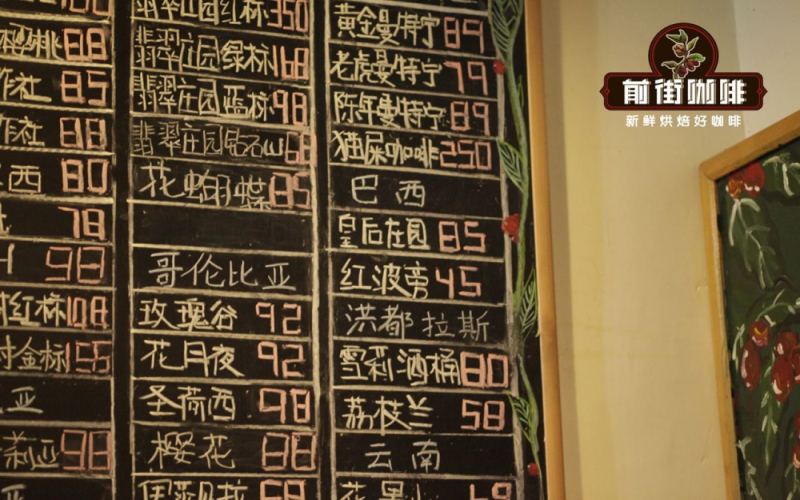
The evolution of coffee varieties in Yunnan is a history worth telling in detail. Why was the originally introduced Typica later replaced on a large scale by Catimor? What flavor limitations does Catimor have? Front Street Coffee insists on growing Typica in Baoshan, using washed processing to preserve the authentic taste of the region, and has verified this bean's expressiveness through cupping and repeated brewing. This article will trace the ins and outs of Yunnan coffee's variety replacement, include the Yunnan coffee market conditions in early 2021, and share in detail Front Street Coffee's Typica roasting curve and V60 staged pouring plan, helping enthusiasts reproduce at home a balanced flavor combining nutty, chocolate, and soft acidity. [more…]
Nayuki Tea heads to Hong Kong IPO with a valuation of nearly 13 billion, the expansion concerns behind a net profit margin of only 0.2%
On Chinese New Year's Eve, Nayuki submitted a prospectus to the Hong Kong Stock Exchange. This premium freshly made tea beverage brand, centered on "fruit tea + soft European bread," has completed five rounds of financing and is now valued at nearly RMB 13 billion. However, behind the glossy listing process, its 2020 net profit margin was only 0.2%, with net profit of just RMB 4.484 million, raising concerns about the cost pressures and profitability shortcomings brought by rapid expansion. Can Nayuki leverage its listing to become a dark horse in the new-style tea beverage track? This article will sort through the valuation, membership system, store expansion, financial data, and industry views for you one by one. [more…]
Tea Yan Yue Se Temporarily Closes Stores for the Third Time This Year: An Analysis of Why 70 to 80 Stores in Changsha Have Suspended Operations
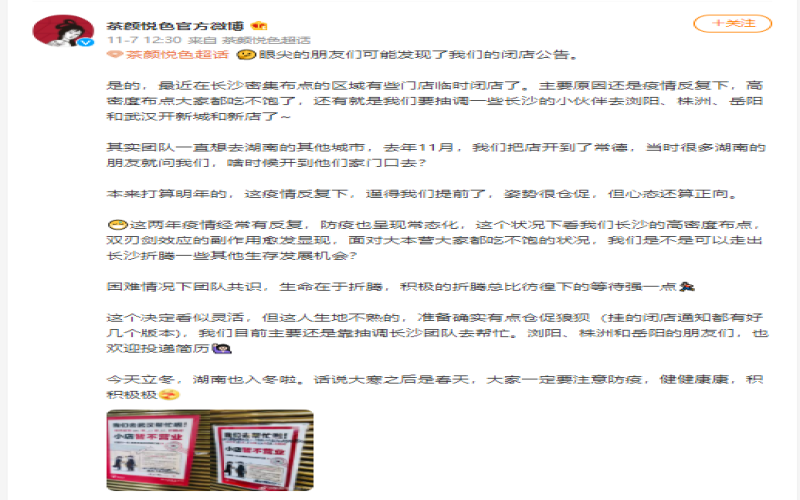
On November 7, the official Weibo account of Chayan Yuese announced the temporary closure of some stores in areas of Changsha where they had been densely distributed, and the related topic quickly trended on social media. On November 10, the brand further responded, saying that this was already the third round of concentrated temporary store closures this year: staying put for Chinese New Year at the beginning of the year, the resurgence of the pandemic at the end of July, and this latest adjustment. As a tea beverage brand that started in Changsha, Chayan Yuese's move has drawn widespread attention—against the backdrop of repeated pandemic outbreaks and intensifying industry competition, is its proactive contraction after dense store distribution and reassignment of staff to Liuyang, Zhuzhou, Yueyang and other places for research and site selection a stopgap measure to cope with the crisis, or is it building strength for the next round of expansion? This article sorts through the timeline and background of the three store closures and reviews founder Lü Liang's cautious attitude toward brand expansion. [more…]
Arctic Ocean makes a cross-industry move into the ready-to-drink coffee sector, as the veteran soda company launches its new "Wok Coffee" latte.
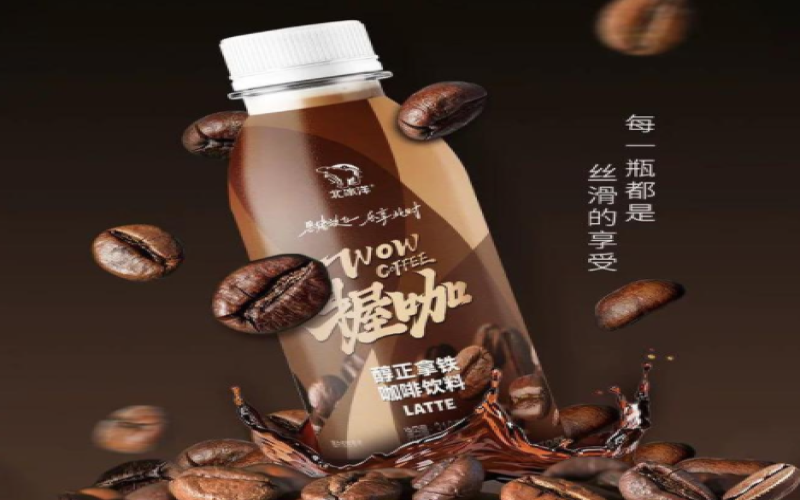
Ready-to-drink coffee, with its advantages of needing no brewing, being affordably priced, and easy to carry, continues to heat up in the consumer market, and is jokingly dubbed "lazy person's coffee" and the "poor man's pleasure" of the coffee world by many consumers. Facing this rapidly growing market, not only are coffee giants like Starbucks and Nestlé continuing to double down, but beverage companies are also entering the fray across sectors. Old Beijing soda brand Arctic Ocean recently listed a new ready-to-drink coffee latte product called "Woka" on its Tmall flagship store, marking the nearly century-old veteran company's official entry into the ready-to-drink coffee sector. However, on a track dominated by giants, whether Arctic Ocean can leverage brand nostalgia to pry open the market remains to be seen. [more…]